Thursday, May 29, 2014

The Deadly Knives (Luo Ye Fei Dao, 1972)


Howdy folks! Get set for another rapid fire review on Hai! Karate!! This next film is a slightly known feature from the Shaw Brothers Studios entitled The Deadly Knives!! The film also goes by the name Fists of Vengeance as well according to a couple of other sites. The film stars matinee idol Ling Yun and Ching Li along with noted stars Lily Li, Chen Feng-Chen and staples Chan Shen, Cheng Miu and Gam Kei-Chu. In the director's chair for this flick is Chang Il-Ho.


The Deadly Knives opens with a view of rich forest and a tree falling. We then find ourselves whisked aboard a train coursing through the hinterland. Yan Zi Fei(Yun) and Guan Yue Hua(Li) are taking this train home from the city together...with love in their eyes, all set to announce to their parents their intention to marry. At that moment, a group of drunken Japanese thugs come through the car causing trouble. And Zi Fei calmly and coolly breaks the gang up with deft martial arts skills. Arriving in town, Zi Fei is greeted by Jiao Jiao(Lily Li), an orphan his father took in when Zi Fei was little. She has a serious jones for Zi Fei, and so gives Yue Hua the major side-eye. Of course, Zi Fei doesn't see Jiao Jiao the same way. This incenses her, and that gets fueled even more by Xu Qian (Feng-Chen) who's another orphan that became part of Zi Fei's house. Who is madly in love with Jiao Jiao. More on that in a bit. Zi Fei finds that the scurvy Japanese magnate Ogawa(Miu) has been after his dad's land for quite some time while he was away. And apparently has an ally in none other than Yue Hua's father(Tang Ti). This of course strains his relationship with Yue Hua, but both decide to keep seeing each other. Jiao Jiao confronts them and in her jealousy picks at Zi Fei, telling him he should honor his house. Yue Hua runs away upset and Zi Fei follows, leaving Jiao Jiao alone. But not for long, since Xu Qian had been following her the whole time. He tries to confess his love but gets angrily shut down by Jiao Jiao. That sets the wheels in motion for a plan Ogawa had cooked up along with Mr.Guan and the local magistrate. They get Xu Qian drunk as hell, who goes back home and begins to basically dream of Jiao Jiao naked and..well... does something Divinyls would approve off if you get my meaning. This isn't enough however. Xu Qian then LEAPS UP and breaks into Jiao Jiao's room with all intentions to rape her. Zi Fei busts in and breaks it up. Qian then leaves, but returns and murders Mr. Yan and takes the deed to the land to Ogawa.


Zi Fei goes to the magistrate who tells him that his late father sold the land to Ogawa. A brawl ensues and Ogawa's right hand man Ishikawa(Shen)steps in, brandishing a pistol. Which has everyone shook. Zi Fei tends to his father's funeral, and Yue Hua in the company of her house servant Doggie(yes, they call him Doggie - don't ask me why)arrives to pay her respects. Jiao Jiao taunts her, and Zi Fei sends her away, calling off their engagement. Crushed, Yue Hua still pays her respects and leaves. And THEN Ishikawa's goons arrive to bust up the ceremony. They batter Zi Fei and in the melee, Jiao Jiao gets kidnapped by Xu Qian trying to rescue her. But when he meets with Ogawa later for his payment, all he gets is a swift katana to the neck. Jiao Jiao is then raped by Ogawa and made into a comfort girl. Zi Fei finds all of this out while recuperating from nearly being drowned by Ogawa(and in the process learning his teacher was killed)thanks to Yue Hua and Doggie who rescue Jiao Jiao. But that doesn't end well either, with a final showdown on the horizon once Zi Fei heals and sets about mastering...you guessed it...the Deadly Knives!


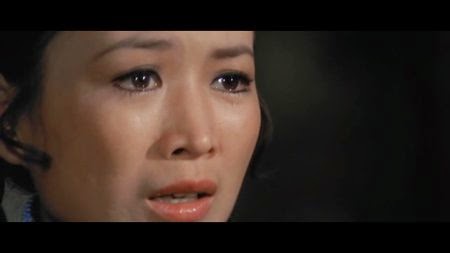
The Deadly Knives is a particularly interesting flick from the Shaw Studios for a few reasons. To begin with, this film was made by Cheng Il-Ho, a Korean director who would essentially helm 10 films in all. He directed this in the same year that he also directed The Thunderbolt Fist. There's similarities between the two films in terms of their sheer violence, their eye towards love affairs and the Chinese versus the evil Japanese plot element. One thing that I do have to address in the film first is the inclusion of rape. We have the first scene where Jiao Jiao is almost raped by Xu Qian. And then we see that she is raped (although it's not fully shown)by Ogawa. And Yue Hua is almost raped by Ishikawa as well. Both Lily Li and Ching Li would find themselves in these 'damsel in distress' roles a bit as their careers grew at Shaw. Lily Li would actually play a rape victim THREE TIMES in Shaw films to my recollection. In this film however, we see that the director and screenwriter took care to show the psychological effects in full. Jiao Jiao winds up with severe mental trauma which becomes yet another tragedy that burdens Zi Fei. It's significant that it wasn't brushed off by Cheng Il-Ho. Another factor to look into here is the Chinese vs. Japanese angle. By this time, Shaw had seen how using this really helped their films gain more appeal. And it kept them neck and neck with rivals Golden Harvest who in two years had seen great return using this in their motion pictures. For those wanting to know more about the action, you may find the dialogue scenes stretched a bit. But you're rewarded with fight scenes that are about furious brawling. Cats get broken over chairs and tables, and towards the end things do get gory.(A note to the squeamish - expect blood geysers here and there.) Yuen Woo Ping as fight choreographer makes good use of the set space. He even has a cameo in the film as a Japanese fighter. The actors definitely help the cause. Ling Yun by this point was well regarded as a classic star of the 1960's and was now getting into more kick & punch films. Casting him as Zi Fei was brilliant in that he gives the character enough emotional depth to convey his conflict and resolve throughout. Ching Li shines here, particularly in the funeral scene (weeping is a strong suit of her acting skills) and when she rescues Jiao Jiao from Ogawa's mansion. As far as the villains, Cheng Miu gives us some bits of sneering as Ogawa. But Chen Shen steals the show as the pistol-packing Ishikawa. The way he snarls and sneers makes me wonder if Tupac studied his role to play Bishop in Juice.(Hey, you never know.) There's also an ode to the gunfighter element in the final scene with Zi Fei and Ishikawa that harkens to the Westerns that dominated two decades before in cinema. And symbolism is rife, from the tree felling that opens and closes the film to the duel between knives and guns and what has more honor. There are some moments of comedy, both direct and unintended like those with Doggie and that Xu Qian solo scene. Dean Shek Tien, who plays Doggie, would go on to more fame with Yuen Woo Ping and Jackie Chan in their future film efforts. That said, The Deadly Knives is a decent flick to take in with enough drama and action to pass the time for a spell.

RATING: 3 OUT OF 5 DRAGON PUNCHES

Thursday, May 15, 2014

Drunken Master (Zhi Quan, 1978)


What's going on, good people?!! The next film up for viewing on Hai!Karate is a gem among martial arts pictures, Drunken Master starring the legendary Jackie Chan!!! This film from Seasonal Pictures also stars Simon Yuen Siu-Tien and Hwang Jang Lee. The direction is all thanks to Yuen Woo Ping.


Drunken Master starts out with a man(Lee) walking into a ruined temple. He strides to the altar and finds a note directing him to kill Charlie Wei. This dude then finds Charlie Wei practicing in a field soon after. After mocking him a bit, the killer identifies himself as the infamous Thunderleg Yeh Tieh Hsin. Wei puts up a struggle all through the credits but is dispatched at the end of them. We then cut to a town and the local school run by Wong Kei Yin(Lam Kau). The star pupil - and troublemaker - is his son, Wong Fei Hung(Chan)who basically embarrasses his teacher in a fight.(Side note: in the English dubbed version, Fei Hung is referred to as Freddie. Why? I have NO clue. His dad is also called Robert Wong. *shrug8)Fei Hung's antics get him in a couple of scrapes back to back involving a young woman who he tries to molest but is beaten back by her mother(Linda Lin Ying)in brisk fashion. Fei Hung finds out later that it's actually his AUNT and that the young woman he pushed up on was his COUSIN. Eep. Then a local businessman comes to Kei Yin to complain about Fei Hung beating his hooligan son into near paralysis. Kei Yin is furious, and is on the verge of flogging Fei Hung until his aunt steps in and recommends punishment through rigorous training. Kei Yin relents. But Fei Hung doesn't really intend on repenting...


Fei Hung soon runs into trouble again at a local restaurant where he fleeces the owner out of a huge meal and tries to run. He's then caught by the staff and beaten enough that he winds up being forced to vomit up all the food and wine. This gets the attention of Beggar So(Siu Tien)who steps in and beats down everyone in the restaurant in vivid fashion. It turns out that Kei Yin enlisted So's help to train Fei Hung for a year. So begins the training, wine bottle ever present.


As Fei Hung trains, his cockiness doesn't subside. Not until he crosses paths with Thunderleg in a bathhouse. Excuse me, I meant to say gets MOLLYWHOPPED. To the point that he has to crawl under the crotch of Thunderleg just to live. The humiliation drives him to be humble and train harder. And it's needed - it turns out the local businessman still bears a grudge not only over his son but also over Kei Yin's blocking of a land grab. This sets in motion a plot that will lead to a final contest between Fei Hung and Thunderleg for honor and more.


Drunken Master is a fine blend of kung fu action and comedy that pulls you in bit by bit. Yuen Woo Ping keeps the pacing tidy but allows for the plot to not get too confusing or feel like there's stuff left out. Not bad for your second film as a director. His eye for action was enhanced due to his previous work as an actor and action director with Shaw Studios. Having a renowned father in Simon Yuen Siu-Tien doesn't hurt either. The film also benefits from the action direction of Hsu Hsia, who appears in the film as a minor boss. Jackie Chan further builds on his comedic gifts here, walking a fine line between slapstick and utterly corny humor. By this time his star was rising again, despite difficulties with director Lo Wei who was bent on making him the next Bruce Lee. His fighting skills and acrobatics thrill you as he goes through the 8 Drunken Gods style. (This is inspired by the Taoist Eight Immortals from Chinese mythology as well as Zui Quan or 'drunken alcohol fist' that is seen in various forms including Hung Gar, Chor Lei Fut and Wushu for instance.) Hwang Jang Lee hones his villainous chops well here. The sneer he puts on with the mustache? Magnificent arrogance that would make Jay-Z wince. And his flashy but fierce Taekwondo kicking style is also a key draw; watch how he deals with Fei Hung in the bathhouse. This actually would be the last time he and Jackie Chan would be in a film together. Their prior film, Snake In The Eagle's Shadow left a rough impression on Jackie. Aside from one incident(peep here for the recap), Hwang's kicking was too much for Chan to take, with Jackie getting another injury, this time to the ridge of one of his eyebrows. That led to him pointedly avoiding casting Hwang again for his own movies, opting to go with another famous Korean fighting actor, Whang In Sik. Their fight scenes are still epic however. The final fight alone will take you through some feelings with the impact of blows. And as for Beggar So? This flick led to Simon Yuen being further hailed as a crafty and venerable actor in Hong Kong cinema. Keep in mind that this year alone saw him star in FOUR classicly regarded pictures. I'll build on that another time though. He helps enhance the comedy as a drunken hero and father figure to Fei Hung. (Side note: Linda Lin Ying who plays the aunt at the beginning would only be in 3 more films after this, bringing her total to 7 overall. And she'd be in another picture with Simon Yuen.) When Drunken Master opened, it was a smash hit, earning nearly seven million dollars in total. The film would help Seasonal become better entrenched as a prime movie studio and as a leader in making kung fu comedies at that time. It was also well received for the many martial arts styles in the fight scenes as well as being a comical play on the Wong Fei Hung saga, which to this point was done with a bit more seriousness given that he is a Chinese cultural hero. The flick has had wide-ranging cultural influence across the globe, from video games like Tekken to anime such as Naruto and Yuyu Hakusho and Dragonball Z to be exact. Drunken Master is a joy to watch. If you haven't seen it, correct that error immediately. For real. And if you have, I know you have that as one of your go-to faves like I do.

RATING: 4.5 OUT OF 5 DRAGON PUNCHES

Tuesday, May 6, 2014

Sister Streetfighter (Onna hissatsu ken, 1974)


Hello all of you fans of the martial arts film world and casual observers, we've got a classic for you today on Hai!Karate.... Sister Streetfighter starring Etsuko Shiomi!! Some of you may recognize her Western name of Sue Shiomi is prominent on the second poster. This film marks the first starring role for Shiomi, a member of the famed Shinichi 'Sonny' Chiba's Japan Action Club of actors and stuntmen and it's a true breakout performance on the heels of Chiba's own box-office success with The Streetfighter in the same year. Co-starring in this picture with Shiomi is Chiba himself, along with Masashi Ishibashi, Emi(May)Hayakawa and Hiroshi Kondo among others. The direction of the film is handled by Kazuhiko Yamaguchi, who made a bit of a name for himself prior to this movie for a ribald reason. But let's get into this movie right here...


Sister Streetfighter opens up in the bustling city of Hong Kong. Li Koryu(Shiomi) is called into the police inspector's office and told that her brother, Mansel (Hiroshi Miyauchi)has disappeared. A Shorinji Kenpo champion as well as a police detective, it's relayed to Koryu that he was possibly taken by the cartel of heroin smugglers operating under a shipping comapny front called Capital Export that he was seeking to bring in. Koryu sets out for Yokohama, Japan and finds herself caught up in a brawl with some shipyard toughs in a cafe. She does handle them all with the help of her cousins Jiro and Remi. (Note the usage of flies in this scene to ward off the lecherous 'pests'.)They go to her uncle's(Kondo) restaurant, where Koryu gets a message with a red rose. This rose is the calling card of Fang Shing, a singer at the Club Mandarin who was working with Mansei. Koryu goes to meet her, but is assaulted. Fang Shing gets abducted by assassins, but is promptly rescued by Seiichi Hibiki (Chiba) who escorts her to his girlfriend's ballet studio. Koryu goes to Mansei's dojo and meets with his sensei who reveals his own suspicions behind Mansei's disappearance. He also tells Koryu that he asked Hibiki to help search, and has asked another prized student, Emi(Hayakawa) to help. Koryu goes to the ballet studio to meet Fang Shing, who details how she saw Mansei get trapped. But she then goes into a frenzy caused by heroin withdrawal. At that moment, thug students of Hammerhead Inubashiri(Ishibashi)burst in to get Fang Shing again. They catch the beatdown from Koryu and Hibiki's girlfriend who shows off her own fighting chops. As this goes on, Fang Shing is assassinated by a man with a blowgun and a big-ass shield and cape. Seriously.


With Fang Shing's death, Koryu realizes that the stakes are high. Especially when she finds out that the main villain is a known magnate, Shigetomi Kazuzaki(Bin Amatsu)who'll stop at nothing to kill her. And by nothing, that also means letting loose Hammerhead and an international assortment of fighters from a Tonfa expert to the Amazon Seven, woman Muay Thai Brawlers.(Side note: that would be a dope-ass name for a rock band.)Koryu winds up in harried battle after battle until she enters Kazukaki's mansion to find Mansel and finish the cartel once and for all...


Sister Streetfighter is pure action. If you're looking for heavily detailed plot development, you will be disappointed. Not to say that the story doesn't move. You get enough to tie in all of the battles in a neat line until the final showdown. This is all due to Morifumi Suzuki's screenplay. Suzuki is best known for his work in bringing the 'pink film' genre to more popularity in Japan. 'Pink' films are essentially a broad genre that has one common element, eroticism. So you can find soft-core porn content to the extreme pornographic element in those films without any real display of genitalia in conjunction with Japanese film guidelines of the time. Toei Studios, like others during the '70's, was trying to stave off financial hardship. They would start incorporating elements of the genre more and more. Suzuki would go on to be heavily involved with a few of those films in his career. The director himself would as well. It does explain why when the film was first released in the West via New Line Cinema, it was given the 'X' rating for the gore and nudity present. In order to get it released in grindhouse theaters across the U.S., six minutes were trimmed. Most DVD releases now have the full, uncut version. But the film's greatest success belongs to Etsuko Shiomi.


Shiomi wasn't even eighteen years old yet when she made this movie, by some records. Her fighting prowess is exceptional, and gives off enough power to keep fight film fans more than satisfied. It's easy to see why Chiba enlisted her for the Japan Action Club. She also boasts supreme acrobatic skill which is a highlight in all of her scenes in the movie. This film would cement her as a box-office draw and cult figure in Japanese cinema. Sonny Chiba makes the most of his brief time in the flick too, with a snappy line to match his kicks near the end in one of the final fight scenes. Now, there is an element of cheese throughout. Bear in mind this IS the '70's. Kazukaki's get-ups are pretty much American Bandstand ready. And note that his claw hand is a direct jack from Enter The Dragon. Also, the blowgun dude from earlier? You mean to tell me NO ONE saw this dude coming with that shield? It's bigger than him!! The wire work at times can be disconcerting when combined with the director's choice at times to use dizzying camera angles for scenes. That said, there's a good amount of gore and blood in this movie. You might get a bit queasy when Koryu dispatches one of the main lieutenants near the end in a 'twist' of sorts. Evil-doers catch bad ones in bad ways, much in line with Yamaguchi's style, but also symbolic. Emi's fight scene in the end testifies to that with her final move. As much as this would seem at first to be a play off of Chiba's smash hit, Sister Streetfighter stands alone as a terrific film. Enough so that FOUR more films were done in the series in the next two years. This film may have an aura of camp to it, but it is important as a film that helped further established that women could not only be great in these martial arts films in Japan but that they could be serious box office draws.So if you want some hard-hitting action delivered by a sister with strength and grace, Sister Streetfighter is a must-see.

RATING: 3.5 OF 5 DRAGON PUNCHES

Thursday, April 24, 2014

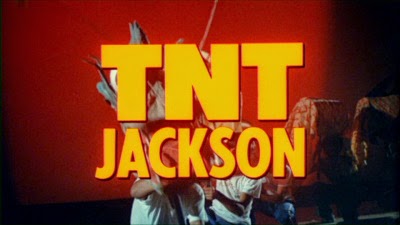
TNT Jackson (Dynamite Wong and TNT Jackson, 1974)


Greetings you fans of fighting films and non-stop action! Here on Hai!Karate we make sure to cover it all and this flick is no exception. We're covering this Blaxploitation/kung-fu relic known as TNT Jackson today! This film is one of the genre's more unique, and more unknown offerings starring Jeanne Bell and Stan Shaw. There's a lot to the flick and why it got made, which I'll get into after we break the plot down. In the director's chair for this film? Cirio H.Santiago.So I hope you like cheese with your kung-fu...


The film opens in a seedy section of Hong Kong referred to as the 'yellow section'. Okay, whatever. We see a couple of characters follow a man into a movie theater. The show AND the flick begin with someone doing the worst Bruce Lee animal style yell on record as a lion troupe perform on stage during the credits. The story is, Diana 'TNT' Jackson (Bell)arrives in Hong Kong to find her missing brother, Stag. She heads to his place in the 'yellow section' after being told it's one of the worst places to be in the city. This is underscored by a woman being sexually assaulted in an alley by one dude until someone else jumps in and snuffs him. After asking around, TNT finds herself jumped by a gang of assailants who she handles in quick fashion. She then finds that she's immediately in dutch with the main drug smuggler, Sid(Ken Metcalfe) AND his right-hand man, Charlie(Stan Shaw). This is told to her by Elaine(Pat Anderson), a woman who is on Sid's payroll. TNT eventually finds 'Joe's Haven'(yes, that is how the place is called)thanks, or no thanks, to Elaine who picks her up after the earlier fight. TNT meets Joe(Chiquito) who's practicing in a loft space above the bar because it's the '70's and all bars have a secret dojo or brothel or other business above the bar. TNT and Joe set out to infiltrate Sid's drug empire to find out what happened to Stagg and find themselves caught up in a mystery. What happened to Stag? Why is Charlie involved with Sid? Why is Elaine even there? All of this leads up to TNT bringing the beatdown.


TNT Jackson is unique because it is a flick that is certified cheese, make no mistake about it. It is representative of a period where everyone wanted the cash bonanza seen in the rise of kung-fu movies spearheaded by Bruce Lee's fame and the rise of Blaxploitation. By 1974, the 'bad Black mama' trope was already in full effect thanks to Pam Grier and Tamara Dobson. In fact, Bell herself was in Dobson's Cleopatra Jones in an uncredited role. Jeanne Bell's career is an interesting one - she became known to people as the first Black Playboy model to appear on the cover. Technically. She shared space on the January 1970 cover with four other models. But Jeanne would get the shaft as HER photo is split in half, placing her on the spine. She was the October centerfold in 1969 though. Jeanne's looks garnered her first taste of Hollywood via the popular TV series 'The Beverly Hillbillies'. One episode had her featured as part of a scheme that saw her as a harem slave girl. Yeah. From those appearances, she wound up getting her first film role in the Calvin Lockhart classic Meiinda. TNT Jackson was her breakout solo role. Aside from that, she would also be in Martin Scorsese's critical classic Mean Streets and do other films and TV shows until 1977 when she opted for love and marriage. Bell is also credited for helping a certain Hollywood duo reconcile and even helping one half of the duo get over his alcoholism. That duo? Richard Burton and Elizabeth Taylor. As TNT though, she's not entirely a knockout. Her fight scenes, like everyone else's, has a tiny bit of flash but still seems too staged. More on that later.


Another face you might recognize is that of Charlie, played by Stan Shaw. Shaw is known best by some for Harlem Nights, but his career got started in Blaxploitation. This was his second film after a bit role in Issac Hayes' Truck Turner, which was out that same year. Shaw displays a good amount of charisma here. He's probably the best actor in this picutre. Plus, he and TNT seem to be competing for best dressed in this flick. Peep every scene he's in, the vines were ridiculous. And his Afro? That may have given Afro-Sheen heavy profits that year in product placement alone. But he and Bell do make for an interesting tandem here. As far as Joe, aka Dynamite Wong? Chiquito would play this kind of role quite a lot in this time period. The Filipino actor actually is regarded as a legend in his country for his comedic roles and also his dedication to stopping a shameful depiction of Chinese-Filipinos in film and TV there. Which is also why this flick has the alternate title you see in the post heading; this is how the film was marketed in the Philippines.


That said, TNT Jackson isn't a great flick. You're going to wince more than a few times. The fight scenes are barely watchable. Bell's fighting skill is 'meh', and Shaw's prowess at times is basically viral video worthy. They do make for some unintentional comedy though. Take for example the scene where TNT is cornered by Ming, an evil boss working with Sid. Mind you, she's basically forced to fight topless. No doubt this was to get that necessary T&A quotient in there. But in that scene, her panties CHANGE COLOR. So much for continuity. And some people meet their end in this flick with some lousy reactions. And note how many times people actually MOVE before they get hit in this picture. Part of the cheesiness is highlighted by the fact that the guy that plays Sid was the SCREENWRITER. Low budget, indeed. But this film has to be seen if only to appreciate its value to the grindhouse genre.(Side note - Bell was actually part of a minor brouhaha with Martin Scorsese and the man who'd eventually produce this film, Roger Corman. Corman wanted to fully finance Mean Streets for Scorsese on one condition - that the film be an all-Black cast. Scorsese refused, but Corman never forgot Bell.) Plus, it's really a little over an hour. What can you get from this flick outside of groans and laughs? A bit of appreciation for the fact that this film is a minor counterpart to the films of the era that saw women take a greater role as action film leads, even if there were still some stereotypical elements still present. So get some wine, coffee or whatever else you like to go with cheese and peep TNT Jackson if you don't have any other way to spend an hour and change. The film is available on DVD AND Youtube.

RATING: 2 Of 5 DRAGON PUNCHES

Wednesday, April 16, 2014

The Angry River(Gui Nu Chuan, 1971)


What's happening Hai! Karate fans?!! We've got another film on deck for you, this one being the very first picture Golden Harvest Studios ever made, The Angry River! This film also boasts another first, in that it is the first starring role for the iconic screen star Angela Mao Ying!! Wong Fung is in the director's chair for this picture, which also features Pai Ying as the main villain and Kao Yuen as the assisting hero.


The story begins with a series of murders committed in ghastly fashion against various people. All of the victims are noble knights. It's soon found out that the Lunar Sect is behind it, at the behest of their leader, King Hell(Pai). Their main opponent, Liangyi Castle is determined to stop them. Lan Tin-Lung, head of the castle, rounds up other fighters willing to join the cause. But at that moment, the Lunar Sect launches a sneak attack complete with poison darts. Tin-Lung is badly wounded, and it is found that there is no cure for the poison - save for the Black Herb. The thing is, the herb is located in a valley guarded by various treacherous traps. No one has ever come back alive. Tin-Lung's daughter, Lan Feng(Mao Ying)doesn't care what the risks are. And so, she sets out to find the Black Herb.


The journey IS difficult, with Lan Feng's skills being severely put to the test. She has to cross...you guessed it, 'The Angry River' and then one of her last trials has her fighting...a monster. I kid you not, a full grown kaiju her size. After these ordeals, she winds up receiving the Black Herb but is now without any of her powers, having lost them in the fighting. She begins the journey back, accompanied by a monk (Fung Ngai) and hero Leng Yu-Han(Yuen) who had tried unsuccessfully to get the Black Herb before. And so, Lan Feng tries to get the herb back despite bandits and the evil wrought upon her by King Hell, with it all coming to a bloody conclusion.


The Angry River is a neat little film that has some kick for all of its ninety minutes. Are there some things you can find an issue in the flick? It does tend to appear a bit boring in a couple of dialogue scenes. Fans of Angela Mao may be a bit thrown off by her few fighting sequences but it IS her first real starring role. Plus, the monster bit does tend to make you chuckle instead of being terrified. That said, Angela shows why Raymond Chow took such a huge risk in casting a relative unknown to star in his first ever picture. Angela Mao was only 20 years old at the time and fresh off of the Chinese Opera scene in Taiwan. That gamble paid off as she would be one of Raymond Chow's shining stars. She displays a good sense of drama throughout, and it is intriguing to see her so helpless in contrast to her future bad-ass persona. But she does get a chance to deliver some punishment and bloodshed, notably taking someone's head clean off in a fight scene. Pai Ying does his villain thing, complete with a heavy tan. If you look closely, you will spot some familiar faces throughout. Sammo Hung features prominently as a villain in a duo with another known role actor who played a villain well, Han Yen-Ching. You will know him from The Big Boss as Boss Mi. You even have Shaw Brothers regular Wilson Tong in an uncredited role and Lam Ching-Ying as a thug is here too, padding the resume. All in all, The Angry River is decent and a good look at just how Angela Mao - and Golden Harvest - got real famous.

RATING: 3 DRAGON PUNCHES OUT OF 5